Brooklyn can feel like the capital of national anxiety these days.
Wander the aisles of the Park Slope Food Co-op, or linger over a slice at your neighborhood pizzeria, and you’ll hear the same conversation playing on a loop: the war in the Middle East, rising autocracy, political tribalism, a nagging sense that something fundamental in the American experiment is fraying.
Scroll the headlines long enough, and it becomes easy to conclude that the country’s best days are behind it. But step back and look at the long arc of modern innovation, and a very different pattern emerges.
Over the past 250 years, an extraordinary share of the technologies that reshaped the world were developed or brought to scale in the United States: the lightning rod, the cotton gin, the steamboat, the telegraph, the telephone, the light bulb, the airplane, the transistor, the microprocessor, the personal computer, the Internet, GPS, the smartphone, mRNA vaccines, artificial intelligence.
These inventions didn’t just improve American life. They reordered the global economy, redefined daily existence and created entirely new realms of human possibility.
So why here?
The usual explanations come quickly: American universities, venture capital, immigration and the steady flow of first- and second-generation founders, a vast consumer market, relatively light regulation, a culture that celebrates entrepreneurs.
All of that matters. But there is another factor that rarely gets mentioned, and it may be the most important of all.
America built a system that allows people to fail — not politely, but spectacularly — and then try again.
In much of the world, failure casts a long shadow. Bankruptcy can haunt an entrepreneur for years or decades, blocking credit, barring new ventures, or carrying deep social stigma. In Europe, Asia and elsewhere, a failed business brands someone as incompetent or irresponsible — permanently.
The United States chose a different path. Its bankruptcy laws evolved to offer second chances. Chapter 11 lets companies restructure rather than disappear. Debts can be discharged. Founders can launch anew without dragging the wreckage of prior failures.
In practical terms, a bad idea doesn’t have to end a career. That legal framework quietly changes the math of risk.
We’re used to hearing the phrase “failure is not an option.” In the American system, however, failure is absolutely an option — and that turns out to be one of our greatest strengths.
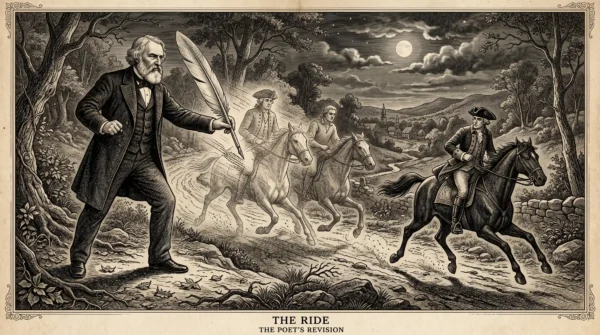
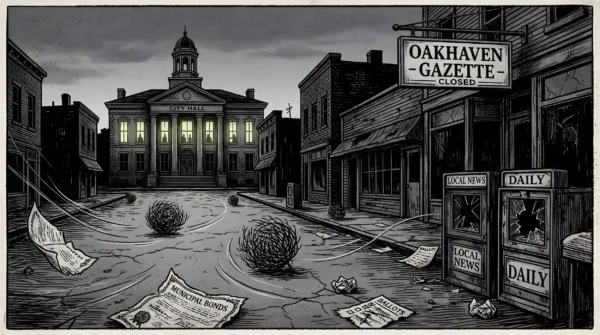
Image generated using Nano Banana 2.
When failure is survivable, people attempt what they otherwise wouldn’t. Investors fund improbable bets. Engineers chase ideas that might collapse before they succeed. Innovation becomes rational.
History brims with examples. Henry Ford failed with two automobile companies before Ford Motor Company took off. Thomas Edison tested thousands of filament materials before the lightbulb worked. Steve Jobs, now canonized, was fired from Apple before returning to steer its most transformative era.
These aren’t anomalies in American business. Failure is rehearsal, not verdict.
That cultural tolerance is reinforced by institutions: venture capitalists who expect most startups to die, universities that reward experimentation, and bankruptcy law as an escape hatch.
The result is an ecosystem engineered for repeated attempts, and repeated attempts are how breakthroughs actually happen.
Transformational technologies rarely arrive fully formed. They emerge through iteration, dead ends and discarded prototypes. Every success story rests on dozens of forgotten failures that funded the learning.
In places where failure is severely penalized, attempts dwindle. Entrepreneurs grow cautious. Investors demand certainty. Ideas needing years of trial and error struggle to attract support. Innovation slows, not from lack of talent, but from punishing consequences.
America does the opposite: It lowers the cost of being wrong. This may seem like a minor institutional detail; it isn’t.
It helps explain why the United States has repeatedly birthed industries that redefine the global economy — from early industrial breakthroughs through aviation, electronics, computing, biotech, digital platforms, space and now artificial intelligence.
None sprang from one brilliant insight alone. They arose from ecosystems crammed with experiments, most of which failed.
Today’s national mood fixates on dysfunction: political paralysis, social division, cultural exhaustion. Those concerns are real, but they coexist with a deeper institutional advantage that’s easy to miss. This country lets people fall without ending their story.
That sounds almost trivial, until you compare it to systems where failure is permanent. There, innovation turns cautious and incremental.
Here, it stays volatile, messy and sometimes spectacular — which is exactly what technological progress looks like.
The American system is imperfect. It breeds inequality, excess speculation and plenty of half-baked ideas. But it also fosters something rare: A culture where failure isn’t final judgment.
Failure is part of the process. And for a nation that still leads the world in invention, that may be the most powerful advantage of all.