Now a member of the Brooklyn Bar Association LGBTQ+ Committee and the Kings County Criminal Bar Association, Zarabi reflected on what it means to bring her full identity to the bench. From the Bronx to the courtroom, she said, each step was made possible by those who came before, and by those who believed she belonged there.
While Jennings and Zarabi represented different generations, their remarks revealed a shared understanding of the power of visibility, particularly in an institution long viewed as indifferent or inaccessible to LGBTQ+ people.
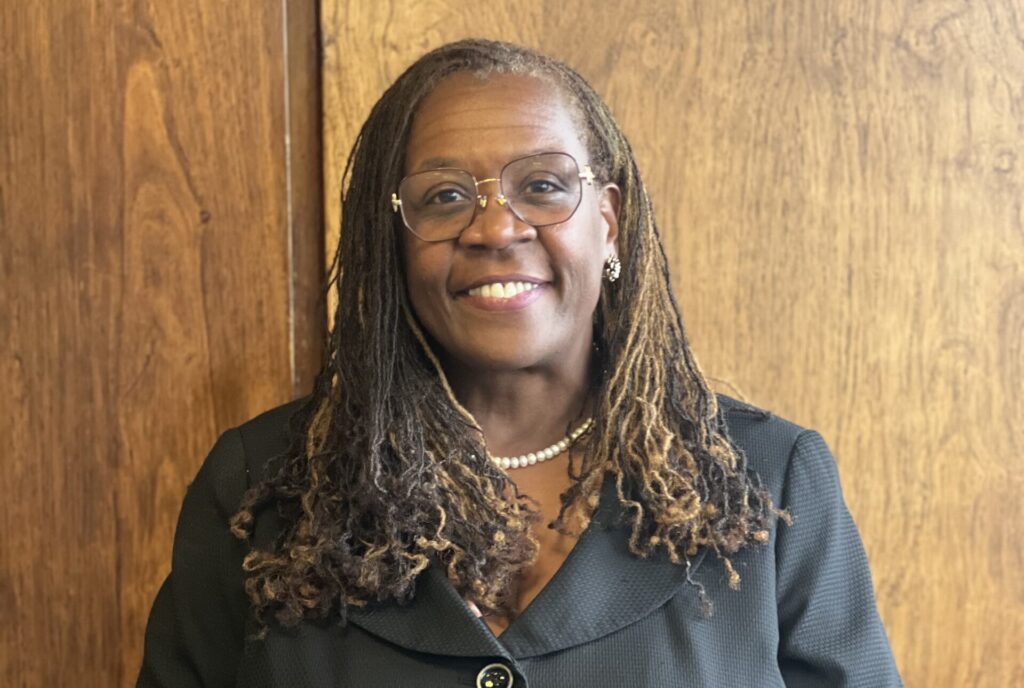
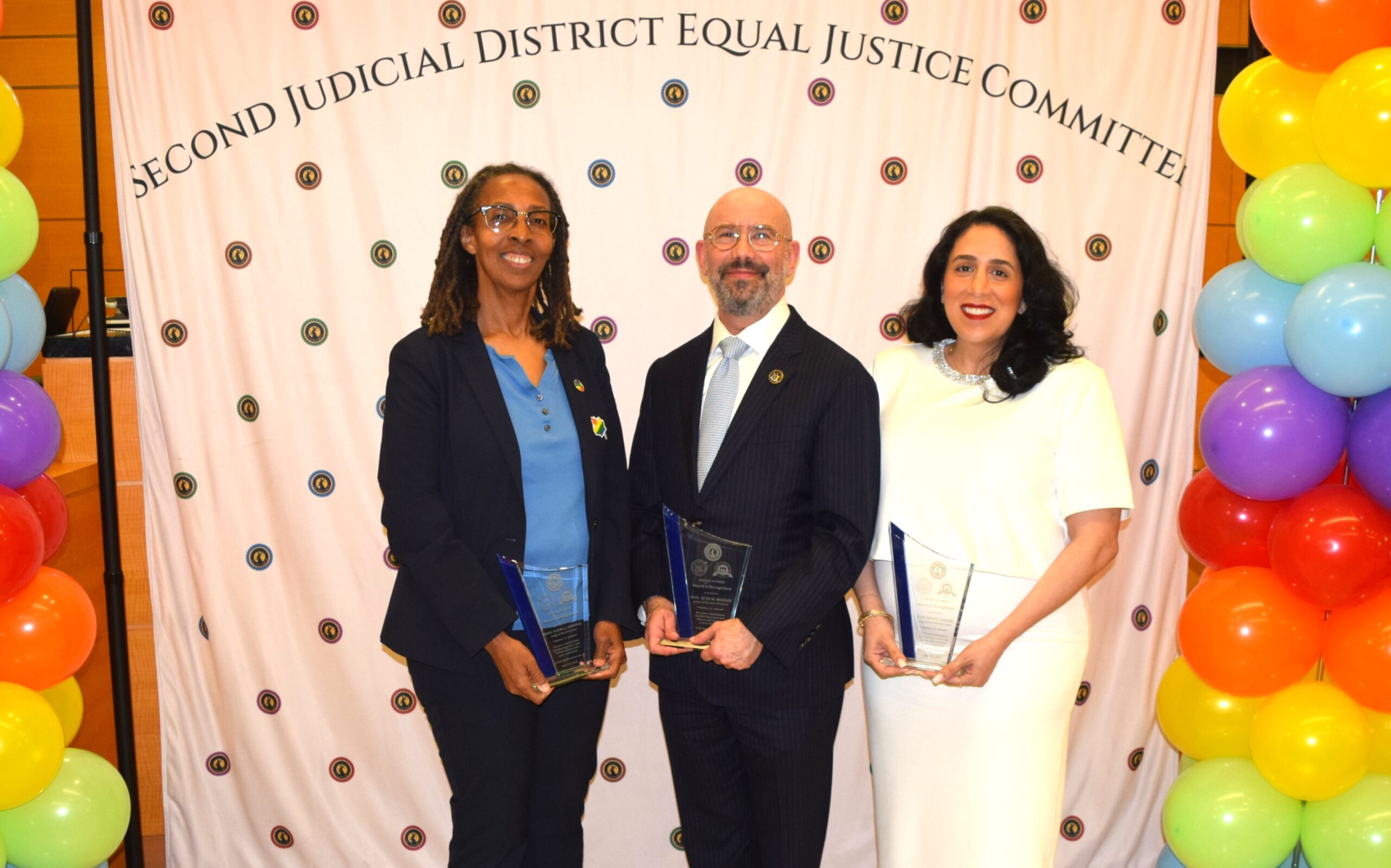
Jennings, now serving as a Civil Court judge in Kings County, began her career in the Housing Court system and ultimately became a supervising judge in New York County. She is the first Black lesbian judge elected to the Civil Court in New York State history, and her rise came after decades of quiet persistence, public service and repeated campaigns for office.
Recalling a time when LGBTQ+ families were largely invisible in public life, Jennings spoke about what it meant to build a family with her wife in an era when both marriage and parenting by same-sex couples were still politically and socially fraught.
“We were one of the first couples,” she said. “My son is 27. My youngest is 19. And they’re doing great. People used to look at us like we were strange. But we just kept showing up.”
Judge Seth Marnin, appointed in 2023 to the New York State Court of Claims, also spoke to that history and the urgency of the present. As the first openly transgender male judge in the United States, his confirmation by the State Senate marked a national milestone. But he reminded the audience that progress remains under threat.
“When my appointment was announced, I received emails from parents … who conveyed to me how the news of my appointment not only inspired them and their children, their queer children, but reassured them that their kids, especially their trans kids, could really aspire to be whatever they dreamed, and that being trans would not be a barrier,” he said.
“Fast forward to today, to be perfectly candid, I worry about these kids. Some of them will not survive as a result of these decisions,” he said, referring to recent restrictions on gender-affirming care and support services. “But I’m not without hope … These young people themselves, they are fierce.”
Quoting Aretha Franklin, Marnin closed his remarks with a reflection on the sustaining force of pride: “It’s the power that gives you the strength… that is your love.”
Ronald Cosme Jr., who served as master of ceremonies, opened the program with a message of joy and resolve.
A longtime court attorney and the principal law clerk to Justice Joanne Quinones, who chairs the Second Judicial Department’s Equal Justice Committee, Cosme has been a visible advocate for LGBTQ+ inclusion within the court system. He currently co-chairs the Brooklyn Bar Association’s LGBTQ+ Committee and played a leading role in organizing this year’s celebration.
“This afternoon is a celebration of pride, visibility and unity,” Cosme said, addressing the crowd from the bench. “And a reminder of our shared commitment to equality and justice, even when the path is not easy and the world tries to divide us.”
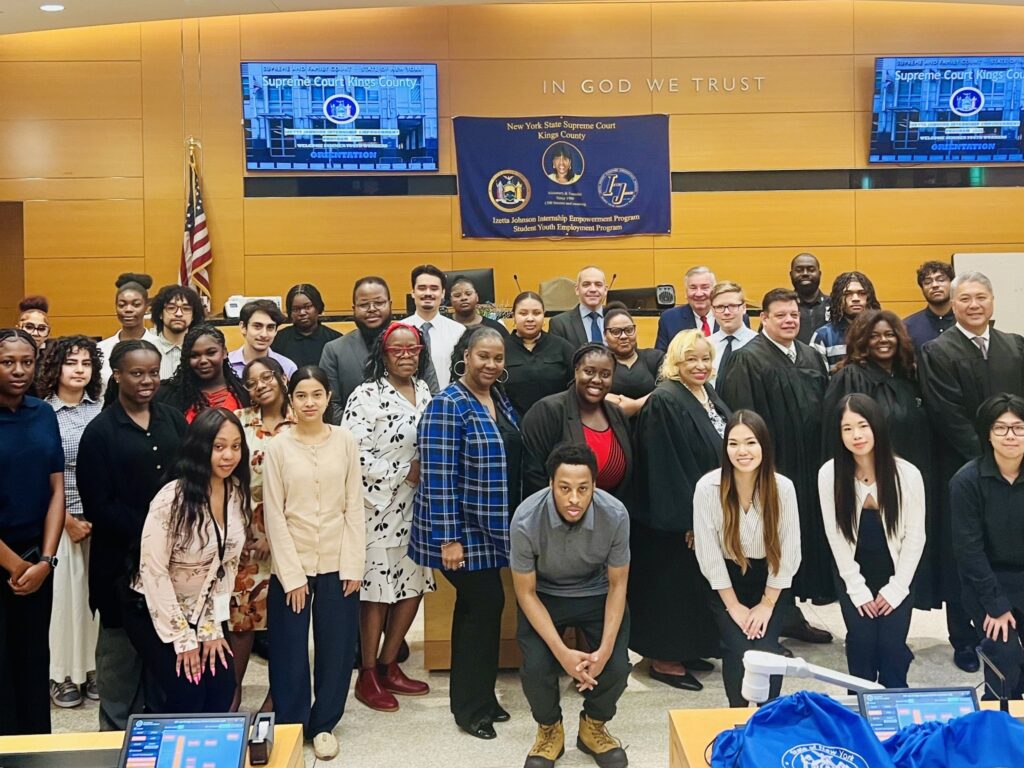
The program featured performances by the Empire City Men’s Chorus and Stephanie Pacheco, the 2024–2025 National Youth Poet Laureate, along with an art exhibition by students from Harvey Milk High School in front of the judges, attorney and court employees who filled the ceremonial courtroom.
What united the honorees was not simply their identity, but their insistence that the court system belongs to everyone, and must look like everyone.
“We’re not going anywhere,” Jennings said. “We’ve got a long way to go. But with community, it makes a difference.”