Swelling grocery bills are pummeling the poorest – who spend over a quarter of their incomes on food
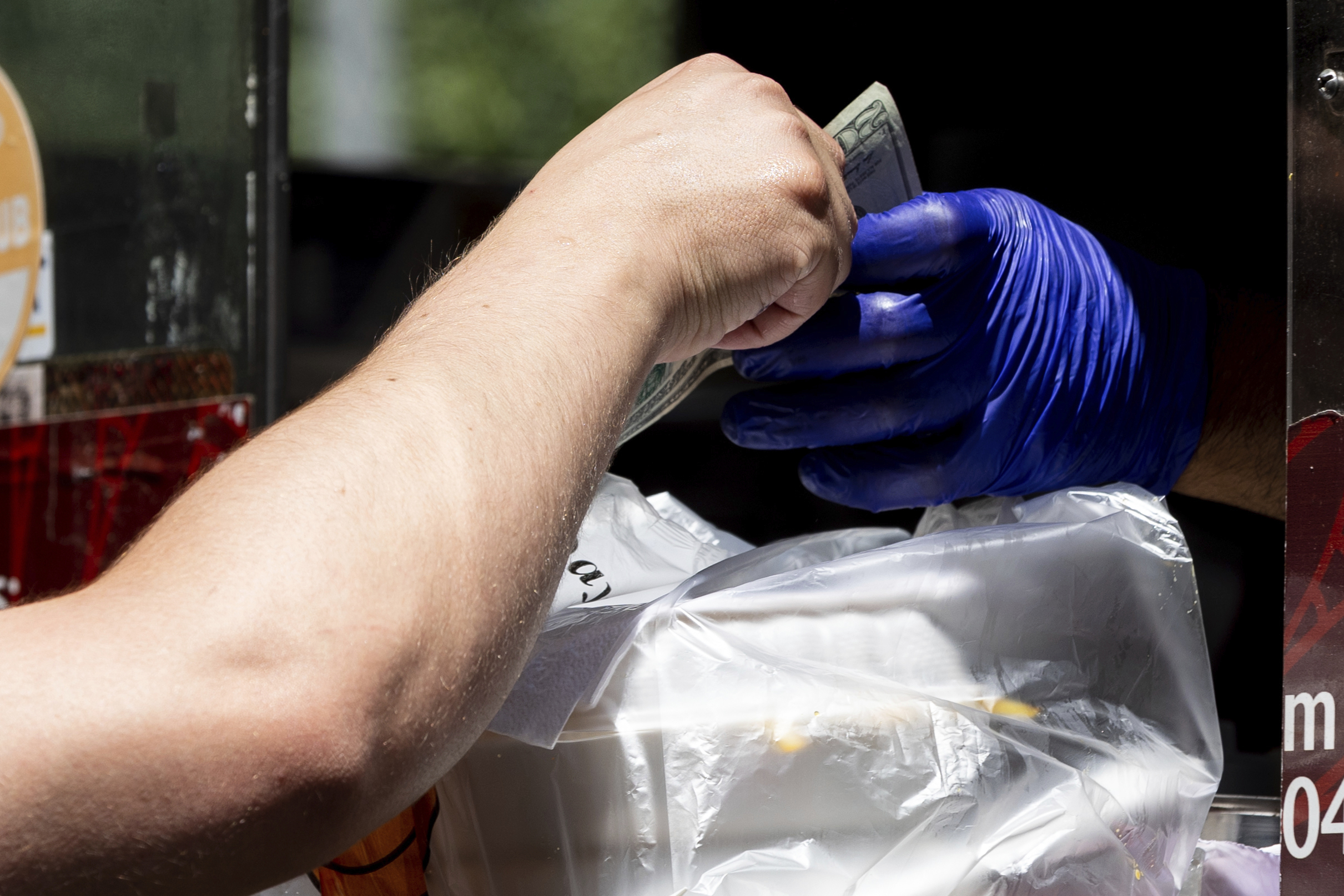
A person pays at a Halal food truck, Wednesday, July 13, 2022, in New York. Surging prices for gas, food and rent catapulted U.S. inflation to a new four-decade peak in June.
Photo: Julia Nikhinson/AP
By David Soll, The Conversation
July 15, 2022
Copy Link
Email
Facebook
X
LinkedIn
WhatsApp
Telegram
Pinterest
Print
The cost of eggs and bread is soaring – a trend that’s particularly punishing for the poorest Americans.
While all Americans have seen their grocery bills swell, many may not fully appreciate the enormous burden that rising food costs pose for low-income households. The reason is simple: Poor families spend a much larger share of their income on food than the median household.
What explains this enormous discrepancy? The answer begins with a dramatic change in spending patterns among American households during the 20th century, which I learned while researching shifts in commuting practices.
In the 1900s, the bare necessities of life, including food, were enormously expensive compared with today, leaving little room for spending on other goods or services for most Americans, according to a 2006 study by the Department of Labor. On average, American families spent over 40% of their income on food in 1901, 23% on housing and 14% on clothing.
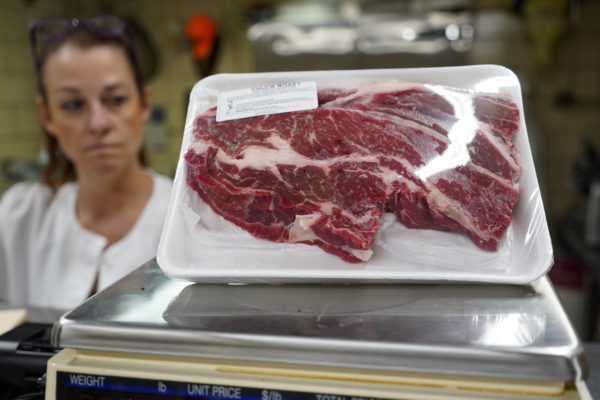
In this June 16, 2022, photo, Dawna Stenzel shows a roast she weighs in the retail section of Wright’s Meat Packing facility in Fombell, Pa. AP Photo by Keith Srakocic
But the relative cost of food and clothing decreased steadily over the next 100 years. By 2002, the two categories represented only 17.3% of a middle-class family’s expenditures and by 2020, the figure had fallen to 14.2%.
The sharp drop in the cost of food and clothing led to a massive reshuffling of family budgets over roughly the past century. As people reduced their spending on these items, they spent more on housing, transportation and insurance. As the country became wealthier, discretionary spending increased, too. Most Americans had more room in their budgets for eating out, televisions and entertainment.
This revolution in household spending largely excluded poor Americans, who continue to devote most of their income to feeding their families and other necessities like shelter. As a result, they are particularly vulnerable to spikes in food costs.
Low-income households devote more than twice as large a share of their budgets to food as middle-income households. As a result, food inflation is around twice as burdensome for families of limited means. But this actually understates the burden of high food costs on the poor because, unlike middle-class families, they have little discretionary spending they can pare back to free up funds for food.
American households are responding to soaring food inflation by eating out less frequently, buying generic brands and consuming less meat. For many, it may be the first time they’ve ever had to be so careful about what they spent on food.
Poor families, however, have long been forced to deploy these tactics to keep food expenditures in check.
An estimated 38 million Americans are food insecure, meaning that they have insufficient means to obtain sufficient food. The concern is, with food inflation rising at the rate it is, more families will face the prospect of being unsure where their next meal is coming from.
SUNSET PARK — “As a resident of Marine Park, one of the great surprises I found biking around Industry City and visiting Japan Village was to discover Bush Terminal Park. I continue to be amazed at the serene hideaways that the city offers in some of the busiest places — and, still, with an iconic view.”
BROOKLYN HEIGHTS — ‘A miracle that no one was killed …’ That’s what neighbors are saying about the collapse of the Hotel St. George marquee. Shown in this photograph are workmen beginning the removal and repair of the historic, old neon sign at the corner, referencing a relic of Brooklyn Heights’ past: the St. George Hotel.
ATLANTIC AVENUE — Exhausted shopper with cluster of bags and goods from mall at Boerum Place stops to look at huge construction site across the street. “Is that REALLY going to be a jail??” Her male companion is reassuring, “Nothing like Rikers … this is 21st Century.”
BROOKLYN HEIGHTS — Overheard in line at one of most popular pastry outlets on Montague Street: “Hope I can get them into a camp …” A mother with two pre-schoolers in tow was showing a friend the Dodge Y flyer for Healthy Kids Day on Saturday, April 18.