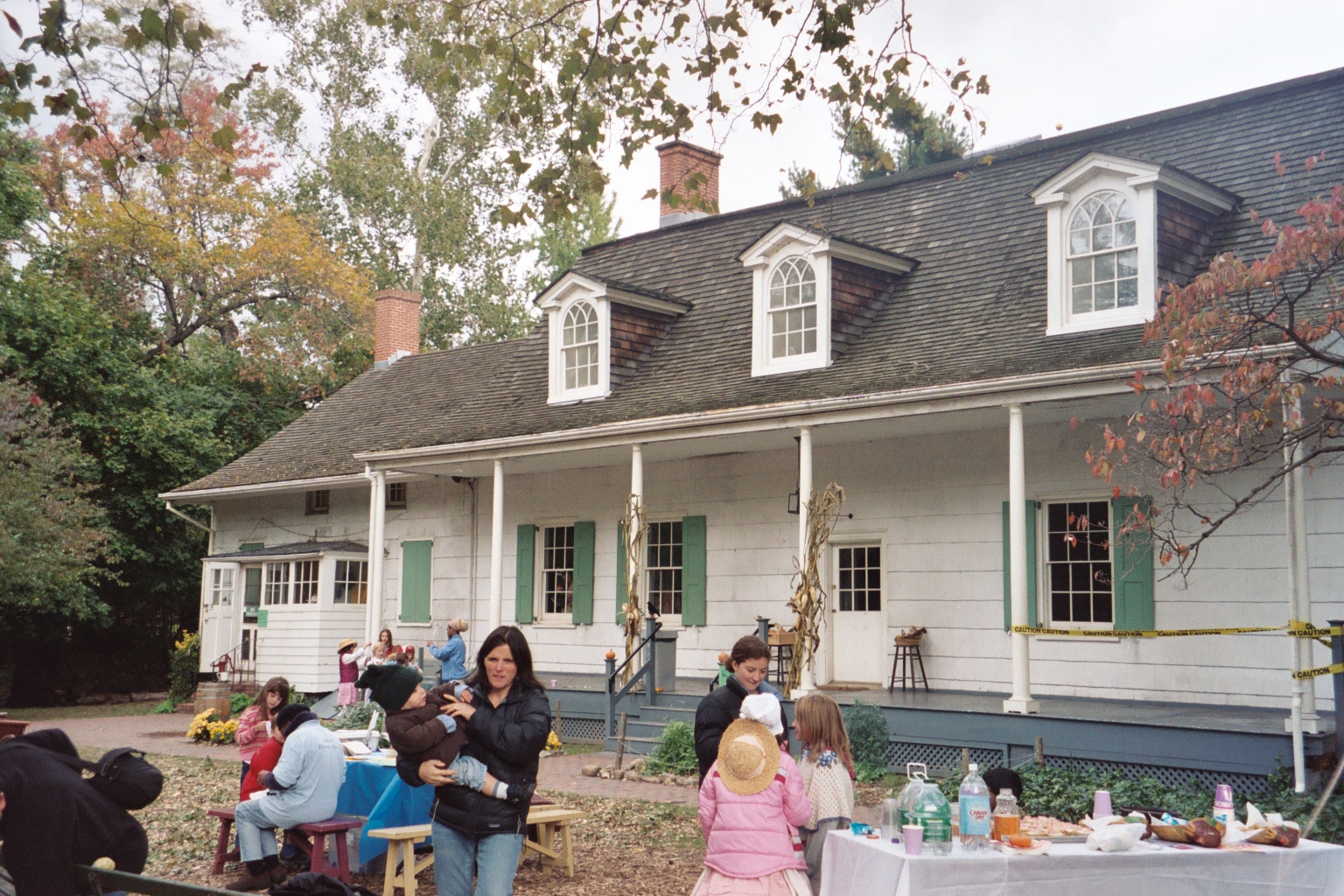
A celebration on June 18 will herald the start of the $2.5 million renovation of the Lefferts Historic House within Prospect Park, which has historic connections to the colonial, Revolutionary and post-Revolutionary periods.
As part of the celebration, which begins at noon, the area across from Lefferts will also be dedicated as “Juneteenth Way” as part of the NYC Parks Renaming Project. A stretch of benches along this walkway will be painted in the colors of the pan-African flag, and interpretive signs will be installed on site.
At the ceremony, the Prospect Park Alliance will also debut “Jamel Shabazz: Prospect Park, My Oasis in Brooklyn,” a site-specific installation of works presented in partnership with Photoville. For the past 41 years, Shabazz has documented the people and places that truly make the park Brooklyn’s Backyard.
The original Lefferts Homestead on the site, owned by the Dutch-American Lefferts family, dated to the late 17th century and burned down during the Revolutionary War. Peter Lefferts, who had served in the Flatbush Militia during the war, built the current structure after the Revolution.
An antique cannon on the grounds of Lefferts Historic House. Eagle file photo by Lore Croghan
Originally, this house was located near present-day Flatbush Avenue and Maple Street, according to the Prospect Park Alliance. In 1917, the Lefferts estate said the city could have the house if it were relocated to city property, which is what happened. In 1920, the Fort Greene chapter of the Daughters of the American Revolution opened it as a museum.
During the immediate post-Revolutionary period, the Lefferts family was one of the largest slaveholding families in Brooklyn. After the end of slavery in New York State in the 1820s, the family moved toward renting out plots of land for tenant farming and sold a parcel of its land which eventually became Weeksville, a historic neighborhood founded by free African-Americans.
Currently, the Prospect Park Alliance, in its programming, concentrates on all three groups of people who were connected with the house: the Dutch-American colonists such as the Lefferts family; the Lenape tribe of Native Americans who originally worked the land; and the enslaved Africans within the household.
The $2.5 million in funding from former Speaker Melissa Mark-Viverito and the Brooklyn Delegation of the New York City Council will enable the Prospect Park Alliance to replace the roof, restore the exterior of the building, and repair paths and drainage surrounding the house.
SUNSET PARK — “As a resident of Marine Park, one of the great surprises I found biking around Industry City and visiting Japan Village was to discover Bush Terminal Park. I continue to be amazed at the serene hideaways that the city offers in some of the busiest places — and, still, with an iconic view.”
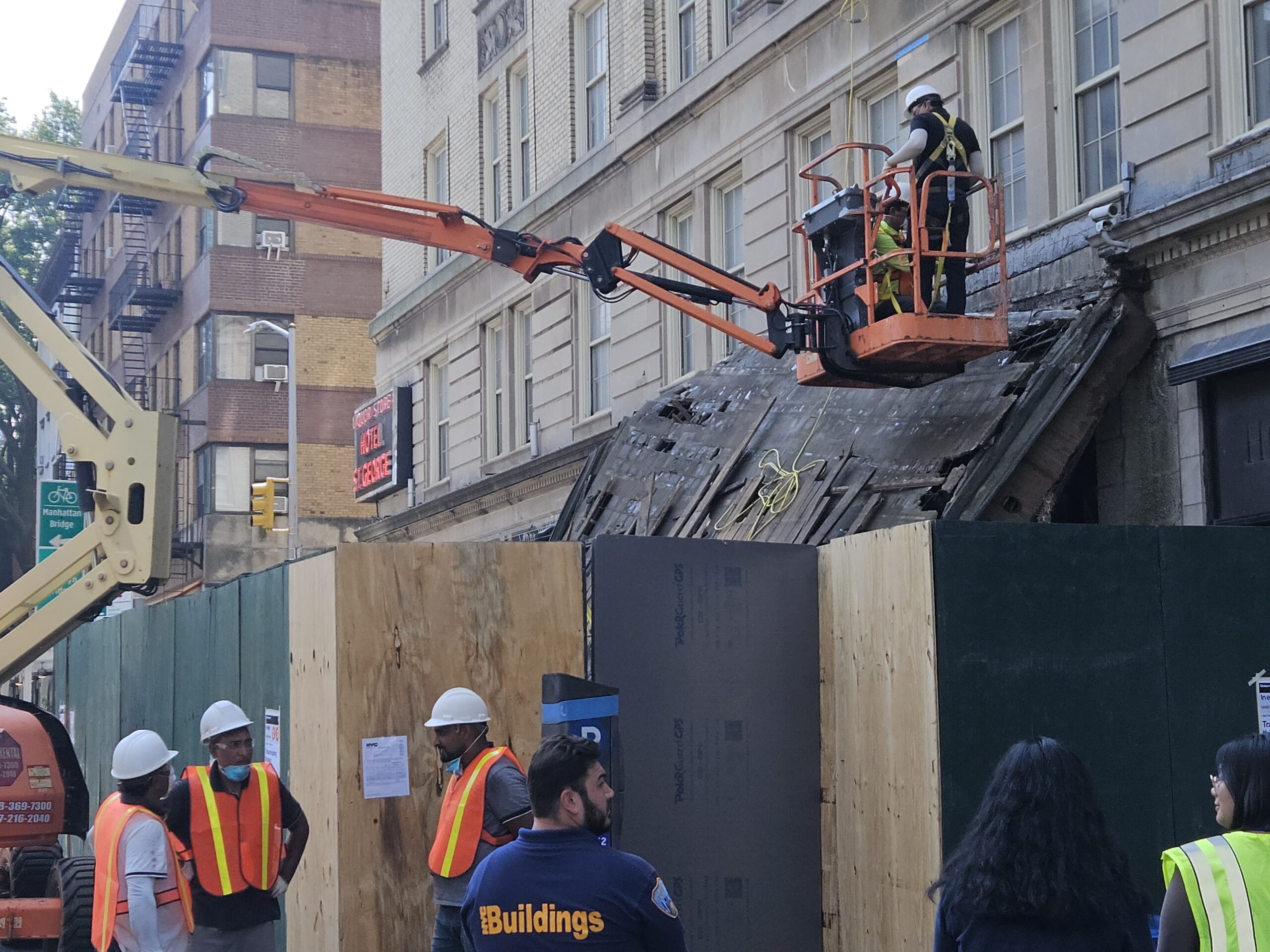
BROOKLYN HEIGHTS — ‘A miracle that no one was killed …’ That’s what neighbors are saying about the collapse of the Hotel St. George marquee. Shown in this photograph are workmen beginning the removal and repair of the historic, old neon sign at the corner, referencing a relic of Brooklyn Heights’ past: the St. George Hotel.
ATLANTIC AVENUE — Exhausted shopper with cluster of bags and goods from mall at Boerum Place stops to look at huge construction site across the street. “Is that REALLY going to be a jail??” Her male companion is reassuring, “Nothing like Rikers … this is 21st Century.”
BROOKLYN HEIGHTS — Overheard in line at one of most popular pastry outlets on Montague Street: “Hope I can get them into a camp …” A mother with two pre-schoolers in tow was showing a friend the Dodge Y flyer for Healthy Kids Day on Saturday, April 18.