The year was 2016, the presidential candidate under investigation was Hillary Clinton and the FBI director at the time, James Comey, laid out the factors the Justice Department weighs in deciding whether to charge someone with mishandling classified records.
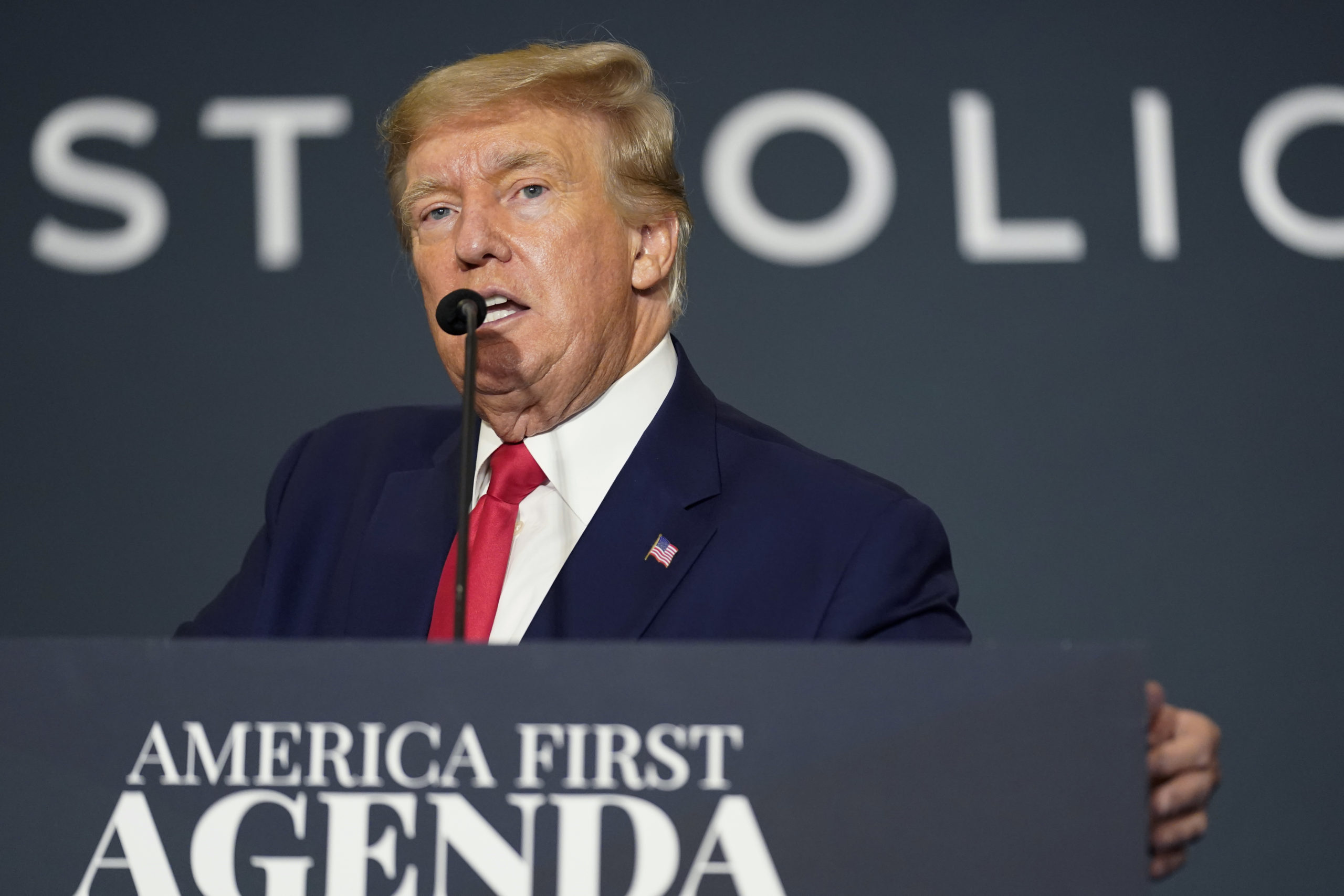
Fast forward to 2022 and that tutorial proves instructive as another candidate from that election, Donald Trump, is entangled in an FBI probe related to sensitive government documents.
Whether an FBI search of Trump’s Mar-a-Lago residence is a prelude to criminal charges is unknown. The action Monday nonetheless focuses attention on the thicket of statutes that govern the handling of government records, though the department’s own history of prosecutorial discretion — some high-profile investigations have ended without charges or in misdemeanor plea deals — makes it hard to forecast with certainty what might happen this time.
“These are statutes that have historically not been enforced to the fullest extent,” said University of Texas law professor Stephen Vladeck.
Much remains uncertain about Monday’s search, including precisely what documents the FBI was looking for — Trump says agents opened a safe — or why it acted when it did. But people familiar with the matter say it relates to an ongoing Justice Department investigation into the discovery of classified material in boxes of White House records the National Archives and Records Administration recovered from Mar-A-Lago earlier this year.
To obtain a search warrant, the Justice Department would have had to persuade a judge that probable cause existed that a crime was committed, though what statute officials think may have been violated is unclear. But if past is any precedent, the mere mishandling of classified information isn’t always enough for a felony conviction — or any charges at all.
“It often comes down to whether there are aggravating factors in these cases,” said David Laufman, a Washington lawyer who as head of the Justice Department’s counterintelligence and export control section oversaw the Hillary Clinton investigation.
Those include, he said, how much classified information was mishandled, the extent to which the person knew they were in possession of classified information and how sensitive the material was and whether its exposure placed at risk U.S. national security.
It remains to be seen what arguments Trump might raise as the investigation progresses. His lengthy statement disclosing the search did not address the substance of the probe, complaining instead that the FBI’s action was a “weaponization of the Justice System and an attack by Radical Left Democrats.”
Christina Bobb, a lawyer for Trump, said in an interview that aired on Real America’s Voice on Tuesday that supporting documentation for the warrant remained sealed and that she had not seen it. But she said investigators said they were “looking for classified information that they think should not have been removed from the White House, as well as presidential records.”
She asserted that the president himself gets to decide what is a presidential record, and it is true that Trump could argue that as president until Jan. 20, 2021, he was the original classification authority and had declassified on his own the classified material recovered from Mar-a-Lago.
But, law professor Vladeck said, it would be a “pretty stunning” argument by Trump to claim as his defense that he had “declassified all of our crown jewels” and, by doing so, effectively admit that he was a “threat to our national security.”
And, Laufman said, “The fact that he has legal authority doesn’t mean…that anything he might have chosen to take from the White House and squirrel away at Mar-a-Lago is declassified. The declassification process does not exist in Donald Trump’s head. It’s not self-executing.”
In any event, key unanswered questions remain, including whether the investigative focus is on “the act of keeping all this material at Mar-a-Lago” or on what the material actually is, Vladeck said.
Given that mystery, he said, “We won’t know for sure until we know for sure.”