✰PREMIUM The Center for Fiction throws annual ‘First Novel Fête’
Literary star of the BAM Cultural District, CFF has built huge community following, cultivating ‘first-novel’ writers
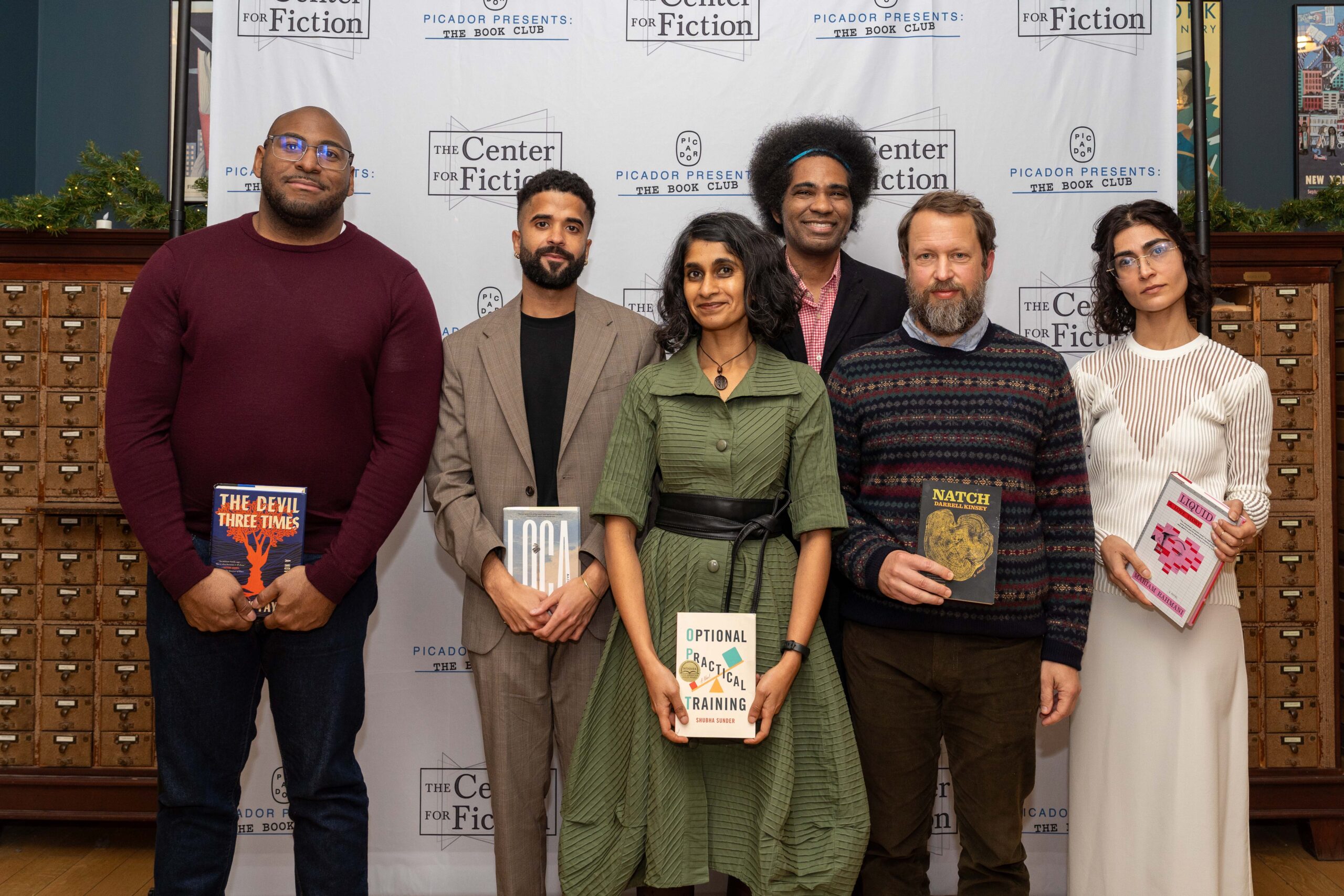
Shortlisted authors hold their new novels in hand at The Center for Fiction. Photo: Obed Obwoge
By Moira Weinstein
December 10, 2025
Copy Link
Email
Facebook
X
LinkedIn
WhatsApp
Telegram
Pinterest
Print
✰PREMIUM The Center for Fiction throws annual ‘First Novel Fête’
Moira Weinstein
Shortlisted authors hold their new novels in hand at The Center for Fiction. Photo: Obed Obwoge
FORT GREENE — The Brooklyn-based Center for Fiction, founded in 1821, held its annual First Novel Fête for first-time novelists at its Fort Greene location on Friday.
The gathering featured readings from the seven shortlisted authors of the CFF’s First Novel Prize, boosting the careers of first-time fiction novelists.
The CFF began this tradition in 2006. One winner receives a $15,000 award, and the other participants receive $1,000 each. Friday’s event was a prelude to the CFF’s annual Awards Benefit in Manhattan, where the official award-winner will be announced, on Tuesday, Dec. 9.
A bookstore worker on a ladder in front of the massive array of books at The Center for Fiction bookstore. Photo: The Center for Fiction
The CFF began in 1821 as The Mercantile Library of New York, predating The New York Public Library by nearly a century. It is not only a bookstore but a literary organization that includes a public store as well as a cafe and bar.
CFF’s KidsRead program provides books to the kids of the New York Public School system, their reading groups connect unique niches and their writing workshops provide a space for writers of all kinds to ignite their path and learn more about what it means to write.
CFF is known for its events that connect cultural communities, organizations and authors, inspiring a new crowd each week. The First Novel Fête is CFF’s annual celebration that brings the literary community together.
Whiskey tastings and debut readings
Those who gathered at 15 Lafayette Ave. buzzed with excitement for new additions to literature. Upstairs, as the authors lined up for the official reading, dozens of guests enjoyed food and unique entertainment.
The exterior of The Center for Fiction. Photo: The Center for Fiction
Fort Hamilton Distillery in Industry City and Esquina Bao Bun in Williamsburg hosted rooms with whiskey and food tastings. The main room had an arrangement of food including delicacies from Greenpoint-based Peter Pan Donut and Pastry Shop.
An overflowing room of eager members of the literary community filled the audience on the first floor. Applause rose from the crowd as Judith Ohikuare, CFF membership and marketing manager, introduced each author.
All those shortlisted, excluding Colwill Brown (“We Pretty Pieces of Flesh”), read excerpts from their books. Some dealt with intimate scenes, like a conversation between two immigrant best friends navigating early adulthood in the Bronx read from Alejandro Heredia’s “Loca,” or the sensual exchange between Natch and Asha, characters falling in love in Darrell Kinsey’s “Natch.”
Other excerpts offered an outward scope, such as the narrator in Shubha Sunder’s novel “Optional Practical Training” who describes being a young adult immigrant in America, thinking about her past life while observing newness.
In Mariam Rahmani’s “Liquid,” themes of typical American romantic-comedy are mixed with allusions to Iranian-Indian culture, describing unique dates the narrator goes on narrated by an academic. The novel deals with themes of class and race while comparing Eastern and Western traditions.
First Novel Prize Finalists pose with their books. From left: Darrell Kinsey (“Natch”), Mariam Rahmani (“Liquid”), Shubha Sunder (“Optional Practical Training”), Alejandro Heredia (“Loca”), Rickey Fayne (“The Devil Three Times”) and Justin Haynes (“Ibis”). Photo: Obed Obwoge
Rickey Fayne’s “The Devil Three Times” transcends American cultures while highlighting Southern dialect, traditions and the tragic history of African-Americans there. It resonated with the Brooklyn crowd in its mention of religious tropes and historical allusions.
A word with the authors
Authors told The Brooklyn Eagle about their writing process, the use of fiction and what they hope to add to the literary community.
The novels selected for the 2025 prize share common themes of identity, belonging, change and immigration.
Justin Haynes’ “Ibis” follows a Venezuelan immigrant child in Trinidad during a time of persecution for undocumented people, a real issue that plagues many. When asked why he chose to write this story as fiction rather than relaying a true account of undocumented immigrants, he said, “The truth of the story is already out there.”
Fiction has space for intricacies and allows the reader to see the truth without getting deterred by statistics. “I wanted to show the tragedy of one family rather than the statistics of millions of them,” Haynes said.
Fayne, similarly, chose fiction because of the way it conveys truth. “The Devil Three Times” is rooted in the African diaspora, religious themes and African-American culture, which he studied. He looks at writing as a way to make sense of the world and issues that have stuck with him.
Customer perusing the Center for Fiction bookstore at 15 Lafayette Ave. in Brooklyn. Photo: The Center for Fiction
“I feel like a lot of writing is just investigating those things that didn’t sit well with us and trying to shed light on them,” Fayne said.
In addition to historical influences, many of the authors were inspired by personal experiences. Fiction allows space from specifics and room for new plots.
Heredia, author of “Loca,” said, “Fiction feels like a place where I can be free and ask myself some serious questions about what it is to be a person in the world.”
His influences included his mother and many other young Dominican women with children he encountered in the Bronx in the 90s, where the novel takes place.
Rahmani said she hopes to reach those who are dealing with immigration and identity. She also desires to spark conversations. “I was hoping to ask some tough questions about how we think about art, how we think about national identity,” she said.
Heredia added, “I particularly wanted to sort of challenge the reader to think about what community means to them, what friendship means to them and invite them to think about friendship and community as something that is an active verb.”
Kinsey aims to tap into the readers’ way of thinking and to satisfy the audience. “My hope is that it’s entertaining,” Kinsey said.
Rickey Fayne reads an excerpt from “The Devil Three Times.” Brooklyn Eagle photo by Moira Weinstein
While Brown was not able to attend and read, her book “We Pretty Pieces of Flesh,” featured young protagonists figuring out their lives and boundaries in Yorkshire, England.
Haynes commended the variety of messages. “There’s such a diversity of voices and backgrounds. With all of us combined, we give a broad view of different slivers of life.”
Fayne said he hopes that readers “move closer to a more empathetic, more understanding, more community-focused society.”
Sunder was “delighted that so many of the longlisted and shortlisted authors had immigrant backgrounds and are telling these vital stories.”
All of the authors were excited to be part of the collective that the CFF fosters through its awards and to be recognized by the literary community in Brooklyn.
Several of them beamed at Brooklynites’ eagerness to consume literature and educate themselves on prevalent issues. Rahmani called Brooklyn “a vibrant literary community.” Heredia expressed his gratitude: “I really am so grateful for the readership in Brooklyn, for the people in Brooklyn who support the arts and believe so deeply in the work that us writers do.”
Alejandro Heredia reads an excerpt from “Loca.” Brooklyn Eagle photo by Moira Weinstei
“To be recognized by the literary community is such an honor in New York City,” Sunder said. The sentiment rang true for all the authors. They commended Brooklyn’s artistic devotion, especially through the existence of the CFF.
“I’m amazed that there exists such an institution as the Center for Fiction,” Sunder said.
The CFF is committed to recognizing voices, including the seven shortlisted authors, who touch upon relevant issues. Its next event will be the Awards Dinner, where the seven authors will be recognized in addition to the Lifetime of Excellence in Fiction Award for Kate Medina and the Medal for Editorial Excellence for Haruki Murakami.
The First Novel Prize will be introduced by Joseph Earl Thomas, author of “God Bless You, Otis Spunkmeyer,” winner of the 2024 prize. The event takes place on Tuesday, Dec. 9, at 6:30 pm.